
When participating in ultra races, always expect the unexpected, as the following account shows. Freezing conditions during part of the challenge could not deter Tahys. She finished in time to be included in the General Classification. No small feat!
The Plan
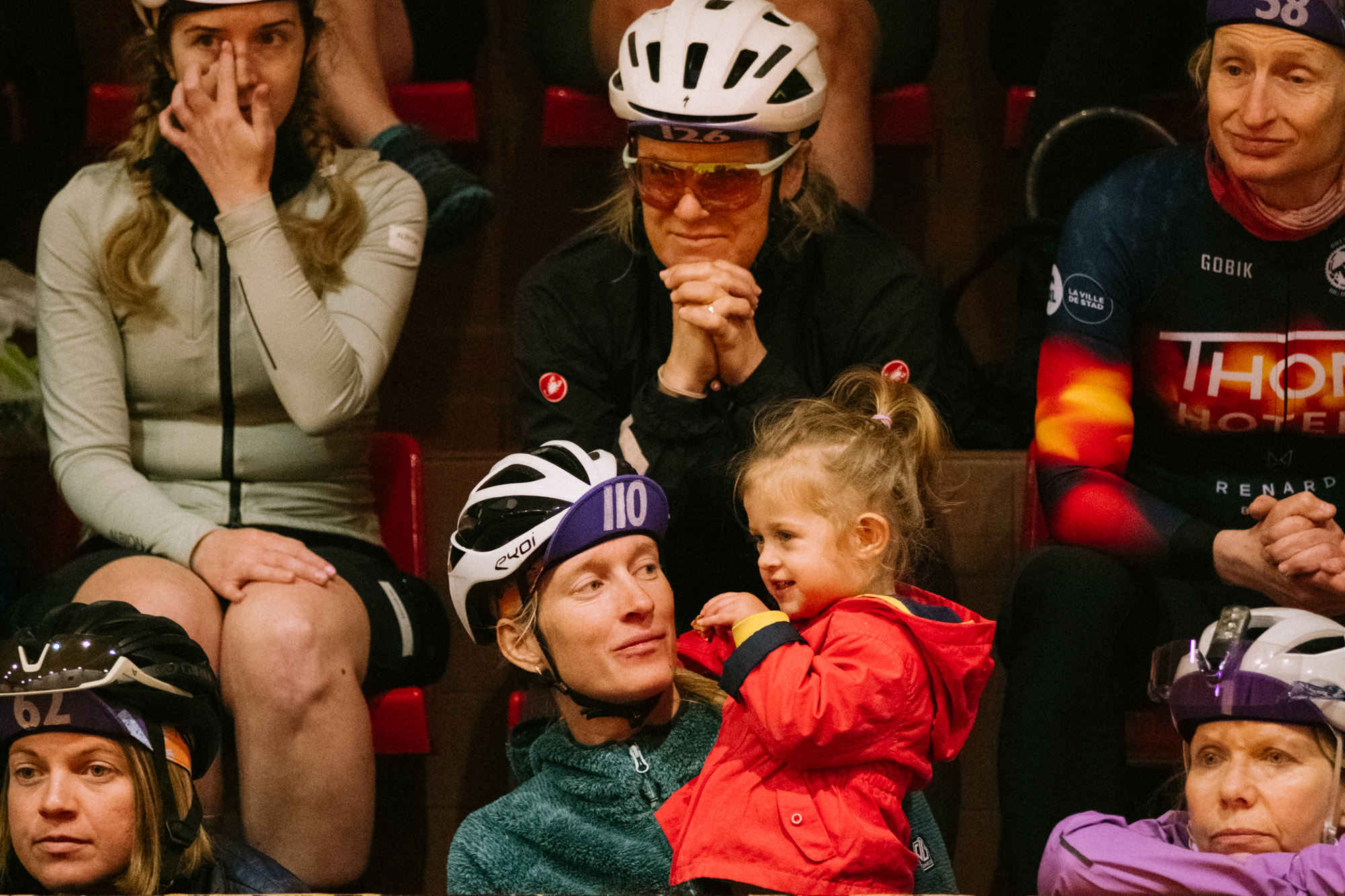
About a year ago, I learned about the inaugural 1200 km (actually more than 1300 km and too much climbs) free route edition organised by the Lost Dot collective (that also runs the Transcontinental). After a discussion during a morning ride with a female member of the club, I decided to sign up without a second thought. I knew it would be hard and that it would require a lot of planning and training. However, being part of an initiative aiming to increase the number of women, non-binary, and trans riders in ultra races and the Transcontinental in particular by offering a shorter format in a dedicated fostering environment, was too appealing.
The Challenge
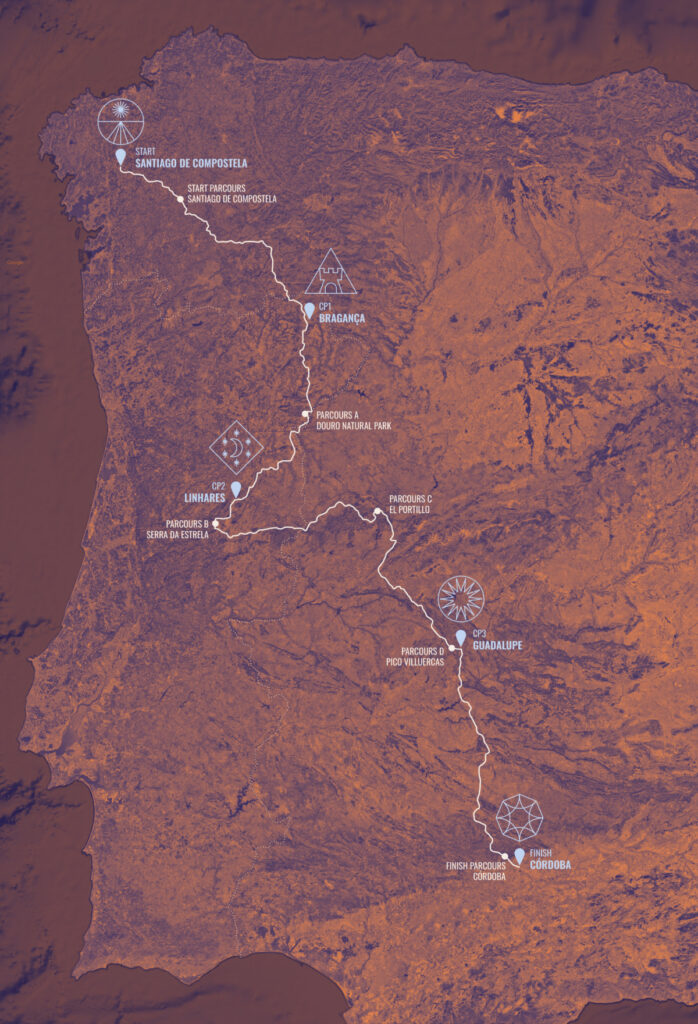
Typical for a Lost Dot event is that the route had to be planned by the riders between the start in Santiago de Compostela and the finish in Cordoba, while passing three control points (Bragança and Linhares in Portugal and Guadalupe in Spain) and with some obligatory sections as well. Other ‘highlights’ included short gravel parts, an astonishing steep descent to Douro river, riding through village centers paved with cobblestones, a brutal ‘muur’ climbing back, a stretch leading through Serra da Estrella to Torre (the highest point of Portugal at near 2000 m) but also the climbs of El Portillo and the Pico Villuercas, with a long passage with slopes nearing 20%.
Whatever you tried during the planning process, you ended up with a frightening challenge, which in my case resulted in a total distance of about 1350 km and 24000 m of cumulative climbing. Although we were not allowed to share these details with other riders, all participants would have to cover a similar distance. Other key ingredients of this race were self reliance and self support, i.e., no assistance at all beyond what was available to everybody, no drafting or rider collaboration of any kind, not being allowed to book any accommodation in advance of the start of the race.
Whatever you tried during the planning process, you ended up with a frightening challenge
The Ride
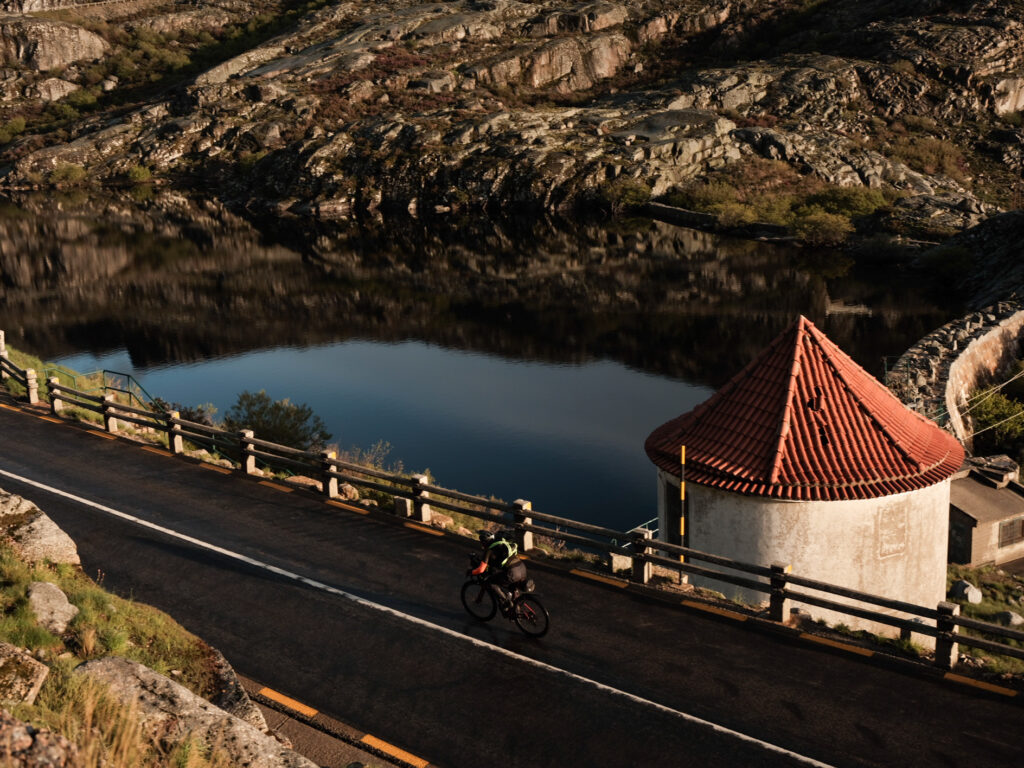
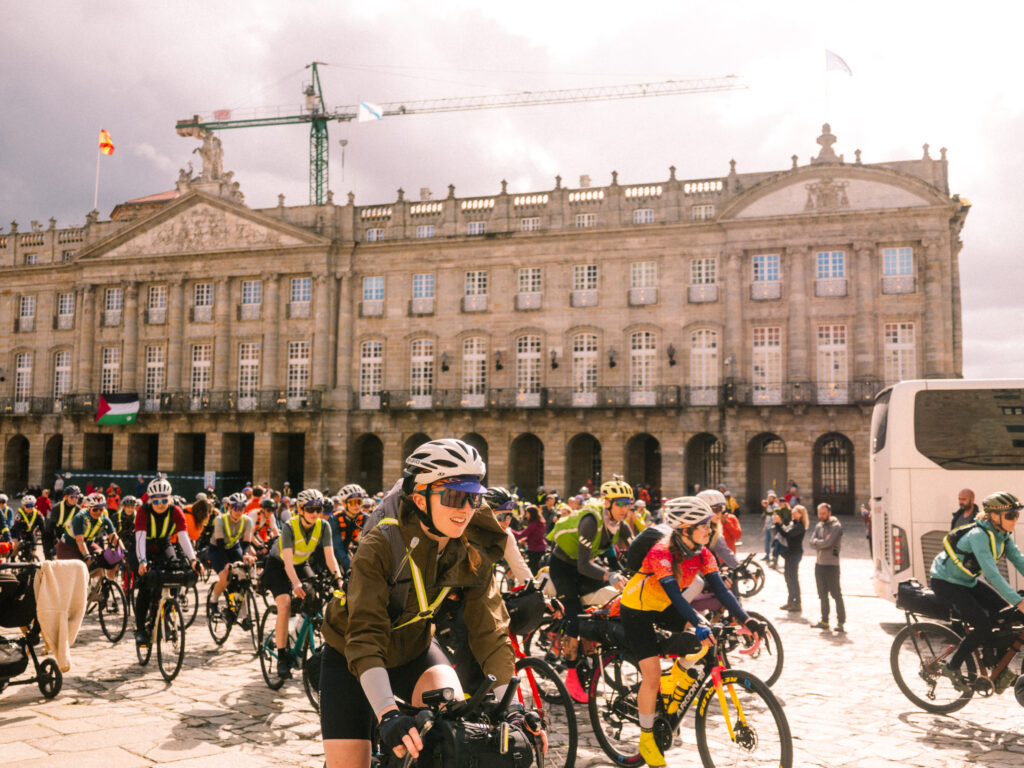
The start was on a Sunday at 6 pm, while we were informed that rain and cold weather was forecast for the next 2 days. I had planned to ride for at least the next 24 hours to accumulate as many kilometers as possible in the first leg of the race, before having some sleep in a hotel. However, things do not always happen according to plan. I had a puncture due to a pothole I hadn’t seen while riding in the pouring rain. I was forced to do a controlled crash in the grass. Unfortunately, my tire was damaged and I had to change my inner tube 4 times that night in a freezing cold. My hope was to reach the first control point in Bragança and find a bike shop. Alas, my last inner tube that I had already patched, gave up 8 km before reaching the control point, forcing me to walk before stopping for the night after only 330 km and 7200 m of D+. At the hotel, I had to wait for the shop to open on the next day. On a positive note, this allowed me a night of about 8 hours of sleep and I had a really long breakfast at the hotel. But it also meant that from that moment on, I had to race against the clock to finish in time for the General Classification, instead of racing against others.
A New Strategy
I restarted at around 11am on Tuesday with a big delay but also with new tires. I decided to skip 1 full night of sleep and ride for the next 31 hours, opting to have only 2 power naps of 20 minutes each. The journey of 340 km and 7300 m of climbs included the gravel and cobblestones parcours in the Douro valley, the passage of the second control point in Linhares in the middle of the night and the Serra da Estrella and the Torre climb. During that Wednesday ride, I also had the first stop for a seated hot meal since the departure in Santiago.
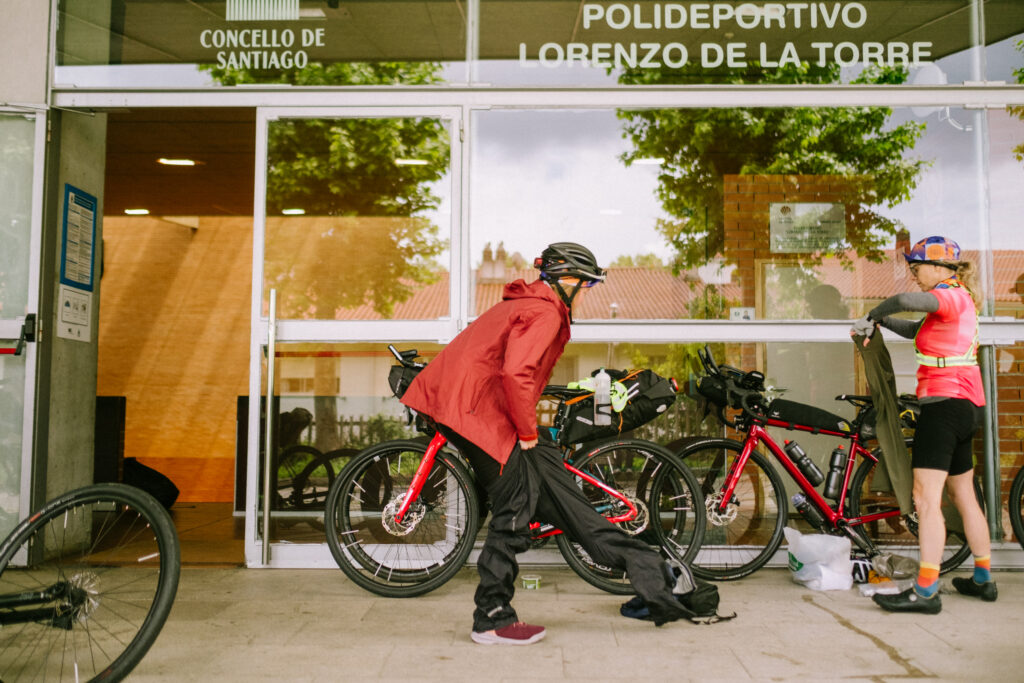
During the Torre climb, the rain started to turn into ice and snow, making the final descent difficult in freezing temperatures. A stop in a hotel at the bottom, eating a giant mountain sandwich I had bought at the top of Torre, and 5 hours of sleep seemed to be the best choice. Meanwhile, my wet clothes could dry a bit. That day I had the impression to have done both Flanders, Flèche wallone and an alpine stage all at the same time.
Back on Track
On Thursday 2 am, I was back on the bike without breakfast, apart for a few cereal bars. Due to a badly chosen trajectory, my derailleur hanger accidentally hit a stone, forcing me to re-align it under the street lights of Covilha. Another 45 minutes lost, but I could solve it without having to change it with my spare one.
After passing through many suburbs, I reached a beautiful area at the border of Portugal and Spain with nearly no villages. It was only at around 10 am that I found a store to have my breakfast, consisting of some pastry and 3 cans of chocolate milk. I also bought some food for the midday sandwich and headed to the second big climb of El Portillo. This turned out to be more complicated than expected, which was certainly caused by the accumulated fatigue.
After the climb, I was rewarded with a descent with moon crater potholes (my biggest route planning mistake) and decided to stop again in a hotel as it was close to 10 pm, after 225 km and 4100 m of D+. The lady at the reception made 2 sandwiches for the evening dinner as the kitchen was closing and let the breakfast room open so I could have something to eat before leaving early the next morning.
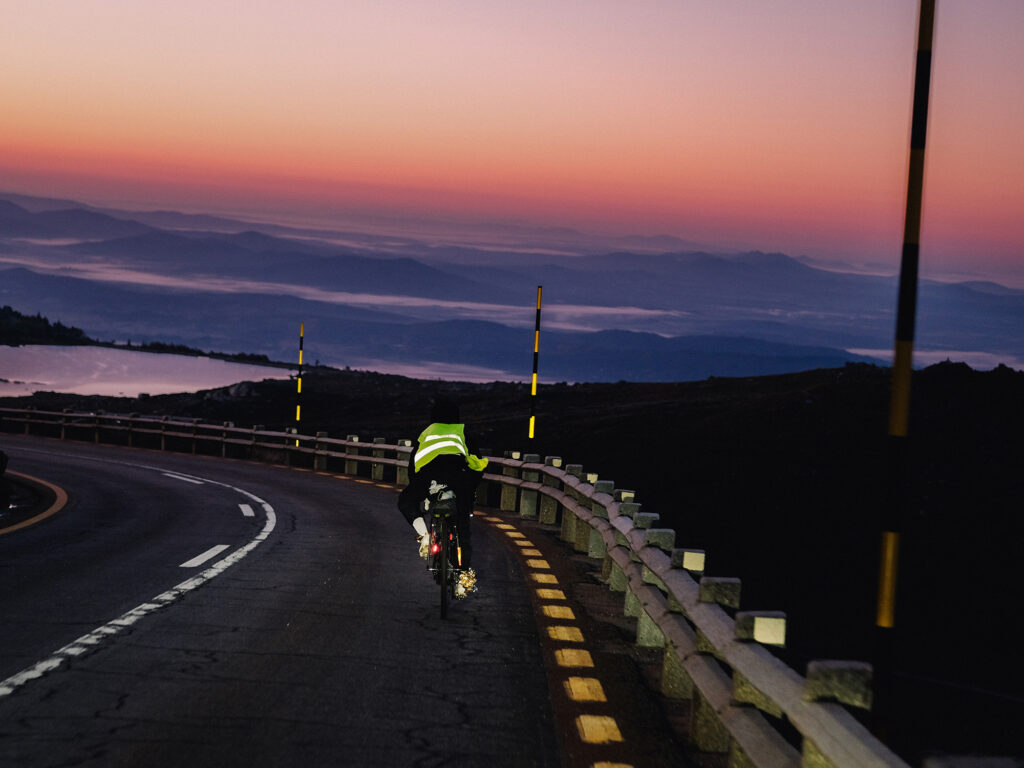
Friday at 2 am, there remained 450 km and “only” 6100 m of climbing before Saturday midnight to finish in time and reach the finisher party. I was finally able to ride in some nice dry weather, with even some expected hot temperatures in Andalusia. However, the Pico Villuercas still had to be crossed. I reached the start of the pass at around 6pm. After another power nap, I discovered that the only possibility to pass it was to walk. 99% of the other riders did the same.
Once at the top, I decided that I wouldn’t stop to sleep anymore. I descended to Guadalupe very fast, ordered as many tapas as I could eat in less than an hour in the main square of the city, packed some left overs and started my third night without stopping. However, with my focus diminishing, I decided to have 90 minutes of sleep, this time under a clear, beautiful sky full of stars, before the final stretch.
The Final Push
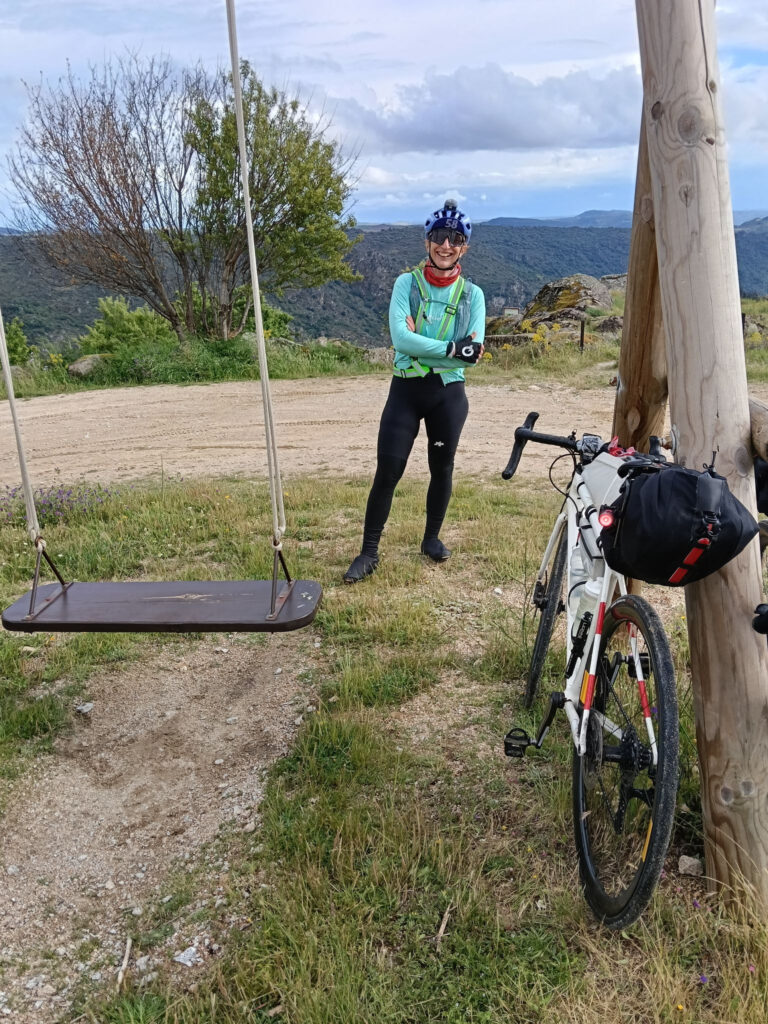
In the morning, I reached a scenic flatter area with lakes, and I had another gas station breakfast near the final stretch to Cordoba. That day, the emotions were too strong. For the first time in my life, I also managed to squeeze energy out of a too tired body, and still felt strong.
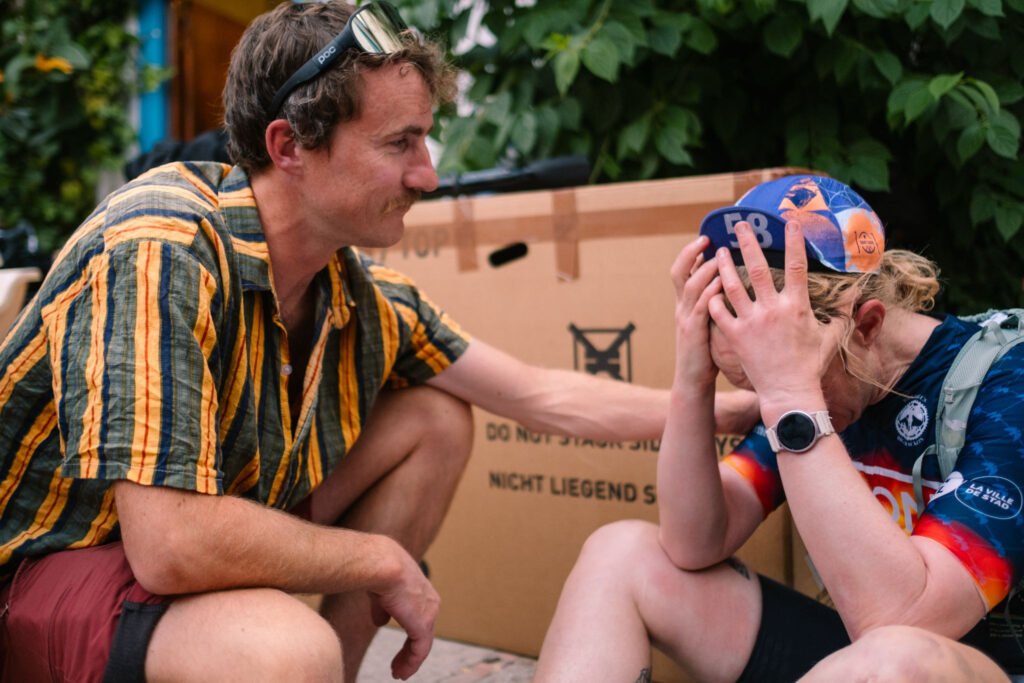
Nearing Cordoba, I had another power nap, as I realized that my trajectories in descent started to be imprecise. I then started the last 42 km final mandatory parcours to approach the city via the hills. I reached the finish line at around 9 pm and arrived at the party exhausted, happy and crying, all at the same time. I had to sit on the ground for several minutes letting it go. That accounted for position 44, just in time to be included in the General Classification. After a pizza and enjoying some music, I collapsed in bed in a hotel, looking forward to a night without having to worry about the next day.
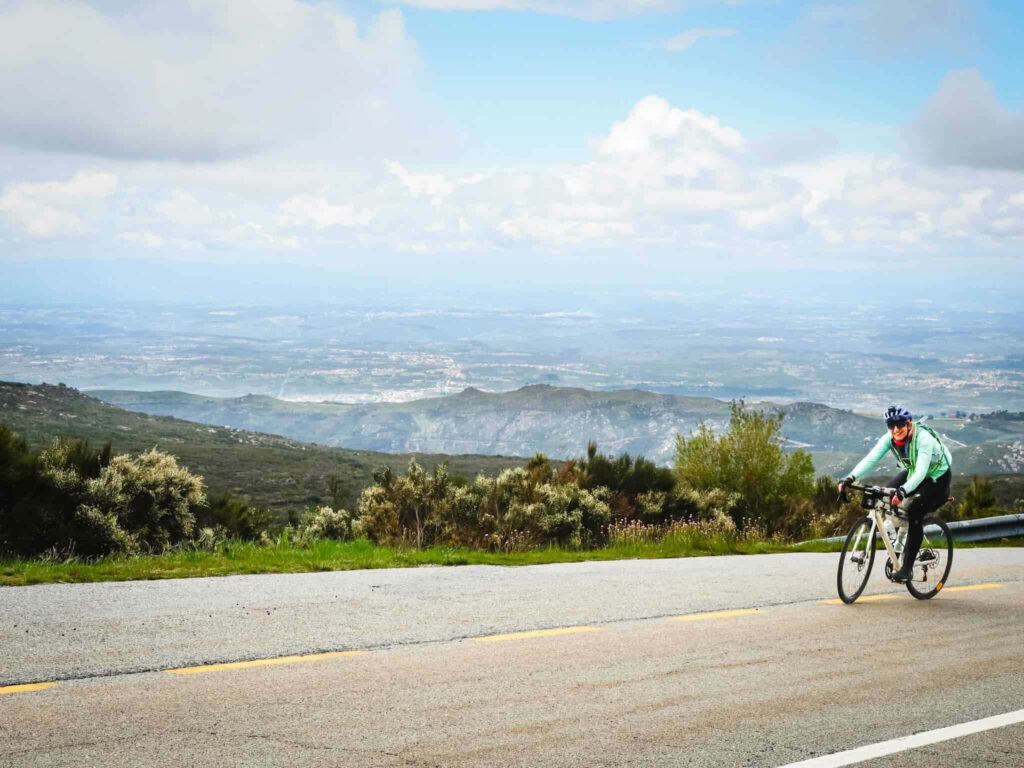
Completing nearly 1350 km and 24000 m of climbing in 6 days was certainly hard but also very beautiful, not only because of the astonishing landscapes of Spain and Portugal that I passed, but also because of the unbelievably warm and welcoming atmosphere the event offered to all of us. Staying in Cordoba and discussing with many others while refueling in coffee, pastry shops, ice-cream parlors, … and visiting the city was also a blessing.
I learned so much on how to race an ultra, about myself and human interactions, that I will never forget these few days.
Tahys Janssen